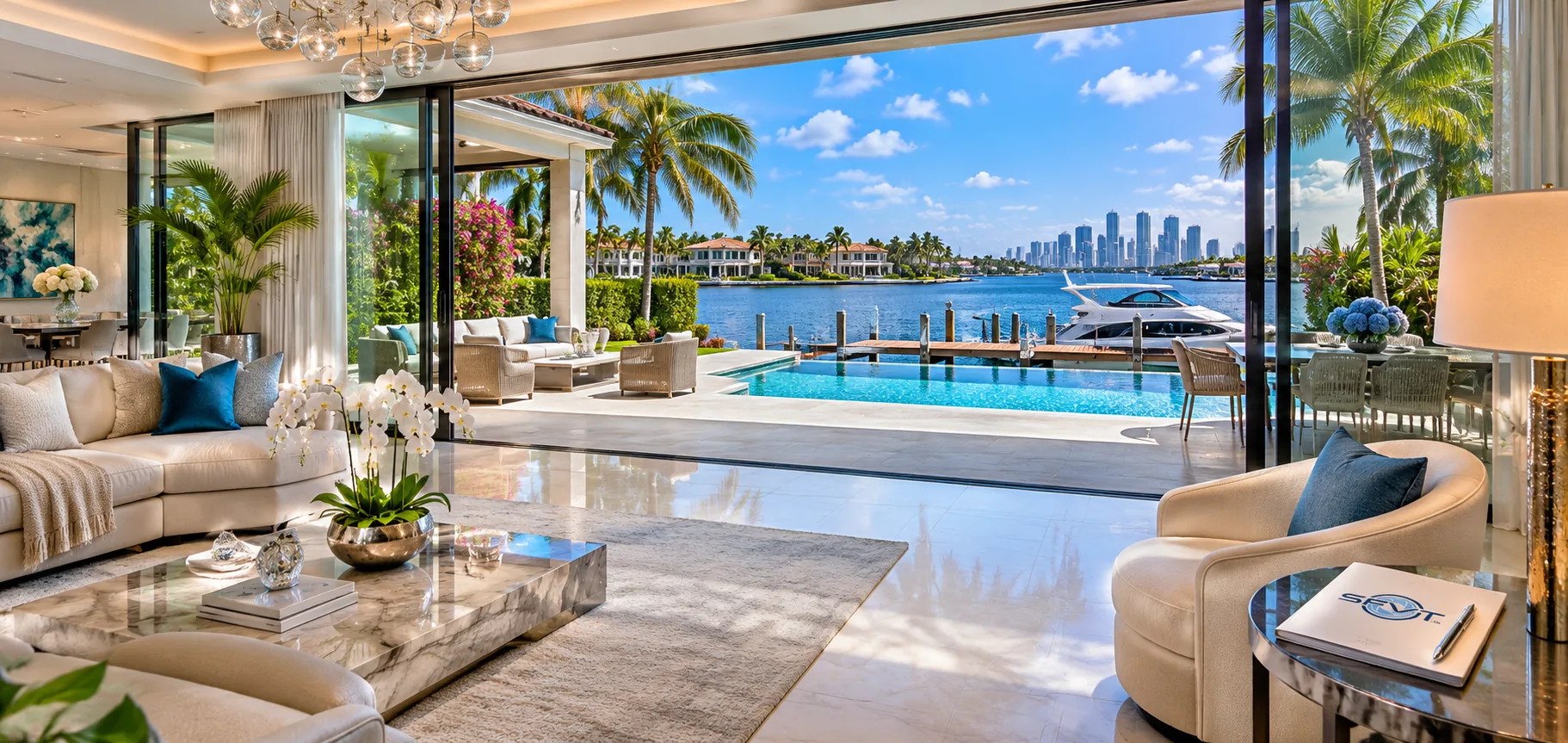
Virtual Tours for Luxury Waterfront Homes in Miami: What Buyers Need to See Before They Fly In
By Robert Dangond, founder of South Florida Virtual Tour · November 2026
In short
On a waterfront home, the water, the dock and the view are a big part of what's for sale. If the photos don't show them, the buyer has to guess.
Florida was the top destination for foreign buyers of U.S. homes, with 20% of them, according to NAR's 2026 international report (purchases from April 2025 to March 2026). For someone buying from another country, the first showing usually happens on a screen.
Your media has to answer six questions: what water it is, what the dock looks like, how a boat gets out, where the light falls, what you see from inside, and how the house flows to the water.
The base we recommend: photos, drone, a Matterport 3D tour and a floor plan. Twilight and video add value when the home shines after dark or has a story to walk through.
What a camera can't confirm (bridges, depth, flood history) gets confirmed with official sources and documents, not photos.
A buyer in Toronto opens a listing for a bayfront home in Coral Gables. Photo one is the front of the house. Photo two, the kitchen. Photo three, a bathroom. The dock finally shows up in photo fourteen, shot from the side, with a garden hose across the boards. The buyer can't tell if the water is a narrow canal or the open bay, or if their boat will fit. They close the listing and open the next one.
On a waterfront property, the water isn't a line in the description. It's a big part of what's for sale. This post is for the agent listing that home: what the out-of-town buyer needs to see, and which media shows it best.
Why this buyer decides from far away
According to NAR's 2026 report on international transactions, Florida drew 20% of the country's foreign home buyers between April 2025 and March 2026, more than any other state. NAR notes the state pulls especially from Canada and Latin America.
Then there's how every buyer shops. In the 2025 edition of NAR's Profile of Home Buyers and Sellers (purchases from July 2024 to June 2025; the 2026 edition, released November 5, keeps its tables for members only), 81% of buyers who searched online rated photos as very useful, 57% said the same about floor plans and 38% about virtual tours. Those numbers cover the whole market, not just luxury or waterfront.
Someone living in another country or another state isn't booking a flight for every house. They narrow the list on a screen first. Your photos and your tour carry a lot of weight in which homes make the showing list.
Six questions your media has to answer
1. What water is it?
Bay, Intracoastal, canal, lake or open ocean. Buyers know the difference. A drone photo taken high enough shows where the house sits relative to open water, how wide the canal is and what's across from it. That's context you won't get from the backyard.
2. What does the dock look like?
The dock and the seawall deserve their own photos, not a corner of another shot. One shot at water level or from the dock, one aerial showing its length along the property, and close-ups of what it has: a boat lift, water or power hookups. If it doesn't have them, don't let the framing imply it does.
3. How does a boat get out?
For a boat owner, this is the question. Aerial video can show the first stretch of the route toward the bay, as far as airspace and the rule of keeping the drone in sight allow. What video can't confirm is fixed bridge clearance or canal depth, which also shifts with the tide. Those get confirmed with official sources or a marine surveyor; if the listing includes them, cite the source. The footage supports the facts. It doesn't replace them.
4. Where does the light fall?
If the water is to the west, the house gets sunset over the water; if it's to the east, it gets the morning. That changes when to schedule the shoot and whether twilight is worth it. If the view peaks at dusk, read our post on twilight photography.
5. What do you see from inside?
The view from the living room, the primary bedroom and the terrace is what the buyer will live with every day. In strong afternoon light, the usual result is a blown-out window or a dark room. The HDR images we deliver are built for exactly that: the room and the water, both visible in one frame.
6. How does the house flow to the water?
Living room, terrace, pool, yard, dock. In a large home, that sequence doesn't come through in separate photos. A Matterport 3D tour lets the buyer walk it at their own pace, and the floor plan shows where every room sits.
Which media answers which question: photos, drone, 3D tour and video
Buyer's question | Best media to answer it | Why |
|---|---|---|
What water is it, and what's around it? | Drone photos | Context you can't see from the ground |
What does the dock look like? | Water-level photos plus drone | Length, condition and what's included |
How does a boat get out? | Aerial video | Shows the first stretch; bridges and depth are confirmed separately |
How does it look at night? | Twilight | Pool, lighting and the water at dusk |
What do you see from inside? | HDR photos | Window and room properly exposed together |
How do you move through it? | Matterport 3D tour plus floor plan | The buyer walks the home without traveling |
What's it like to live there? | Walkthrough video | Walks through the home in order, from the front door to the water |
Not every home needs all of it. A house on a canal with no open view may not need twilight. One with a long dock and direct bay access benefits most from drone. Our South Florida real estate media guide lays out the base package by property type.
When to schedule the shoot
South Florida's rainy season runs from May 15 to October 15, according to the National Weather Service in Miami, and 60% to 70% of the year's rain falls in those months. During that stretch, leave room to move the date if the sky doesn't cooperate, especially for drone and twilight.
Two more things help. Pick the time of day based on which way the house faces, not on your schedule. And confirm early that the drone can fly there: near the Miami and Fort Lauderdale airports the airspace is controlled and the flight needs prior authorization, as we explain in our post on drone pilots.
Before the shoot: the outdoors leads
Inside, the usual rules apply: declutter, open the blinds, replace burnt-out bulbs. They're all in our listing prep checklist. Outside, on a waterfront home, add these:
Clear the dock. Lines coiled, fenders, hoses and toys out of the frame.
Pool clean and full, with the lighting tested if there's a twilight shoot.
Outdoor furniture set on the terrace and by the water, covers off.
Decide about the boat. If the seller's boat doesn't convey with the sale, the cleanest option is to keep it out of the photos; if it stays in, the listing should note that it isn't included.
Fresh landscaping, especially along the line between the yard and the seawall, which the drone sees end to end.
What a photo shouldn't promise
In luxury, trust is worth more than any angle. Three rules:
The view is the view. If there's construction across the water or a bridge on the horizon, the buyer will see it on arrival. Better they know before they book the flight.
Edits get disclosed. If a photo has virtual staging or a replaced sky, note it on the photo or in the listing remarks.
Photos don't replace paperwork. Florida law (section 689.302) requires a seller of residential property to provide a flood disclosure form at or before signing the sales contract. Since October 1, 2025, according to Florida Realtors, that form covers whether the seller knows of flooding that damaged the property during their ownership, whether they filed a flood insurance claim and whether they received any assistance to repair that damage. The seller completes it. This isn't legal advice; for questions, talk to the attorney or broker on the transaction.
What SFVT covers
We shoot HDR photos, Matterport 3D tours, floor plans, drone photos and video with FAA Part 107 certified pilots, twilight and walkthrough video. Every photo order includes a single-property website, so the out-of-town buyer gets one link with everything. See the services on our pricing page.
FAQ
What media does a luxury waterfront home in Miami need?
As a base, HDR photos, drone, a Matterport 3D tour and a floor plan. Twilight and video add value when the home shines at dusk or has a long path down to the water.
Why does drone matter so much on a waterfront property?
It shows what water it is, the full dock and what's around it. You can't see that from the ground.
Does aerial video confirm a boat can reach open water?
No. It can show the first stretch of the route, but fixed bridge clearance and canal depth get confirmed with official sources or a marine surveyor.
When should I schedule the shoot?
Based on which way the house faces. Between May 15 and October 15, South Florida's rainy season, leave room to move the date.
Does a 3D tour help buyers who live out of town?
It lets them walk the home at their own pace without traveling. In the 2025 edition of NAR's profile, 57% of buyers who searched online rated floor plans as very useful and 38% said the same about virtual tours. Those numbers cover the whole market.
Should the photos show everything, even what isn't flattering?
No need to feature it, but don't hide it either. The out-of-town buyer will see it on arrival, and in luxury, trust carries weight.
What does a seller have to disclose about flooding?
Florida law requires a flood disclosure form from home sellers. Since October 1, 2025, it covers flooding that damaged the property during their ownership, flood insurance claims and any assistance received to repair that damage. For questions, talk to the attorney or broker on the transaction.
Keep reading
Is a Matterport 3D Tour Worth It for a South Florida Listing?
Is Twilight Photography Worth It for a South Florida Listing?
Want the full playbook? The free South Florida Listing Media Toolkit shows what media each property needs, how to prep it and how to promote it. Get the free Toolkit here.
Questions before you book? Call us at +1 954 533 6490.